Last year, I was looking for a fun travel destination for a group of friends scattered across North America. It’s one thing to share our lives through text and the occasional video call but we wanted a place where we could spend slow mornings together, have conversations that didn’t end, and simply exist in one another’s company.
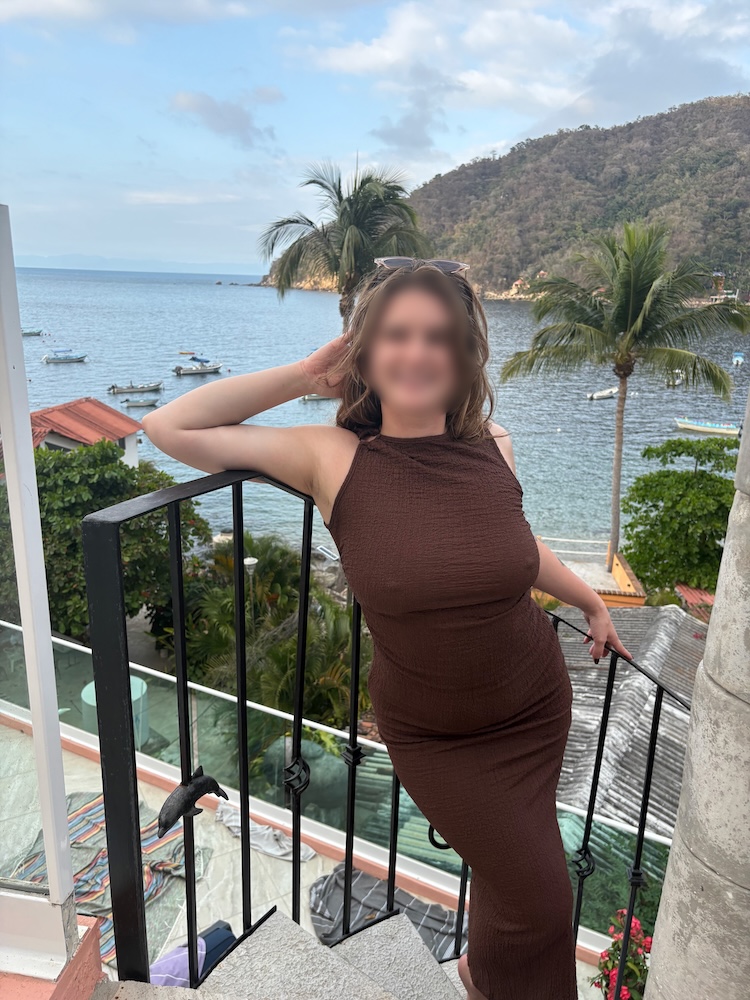
A close friend suggested Yelapa, Mexico which she described as “stepping into Mexico before all the tourists arrived,” I was immediately sold.
Somehow all five of our flights landed on time in Puerto Vallarta, a logistical miracle which we celebrated with margaritas at a nearby marina before booking a water taxi to take us to Yelapa.
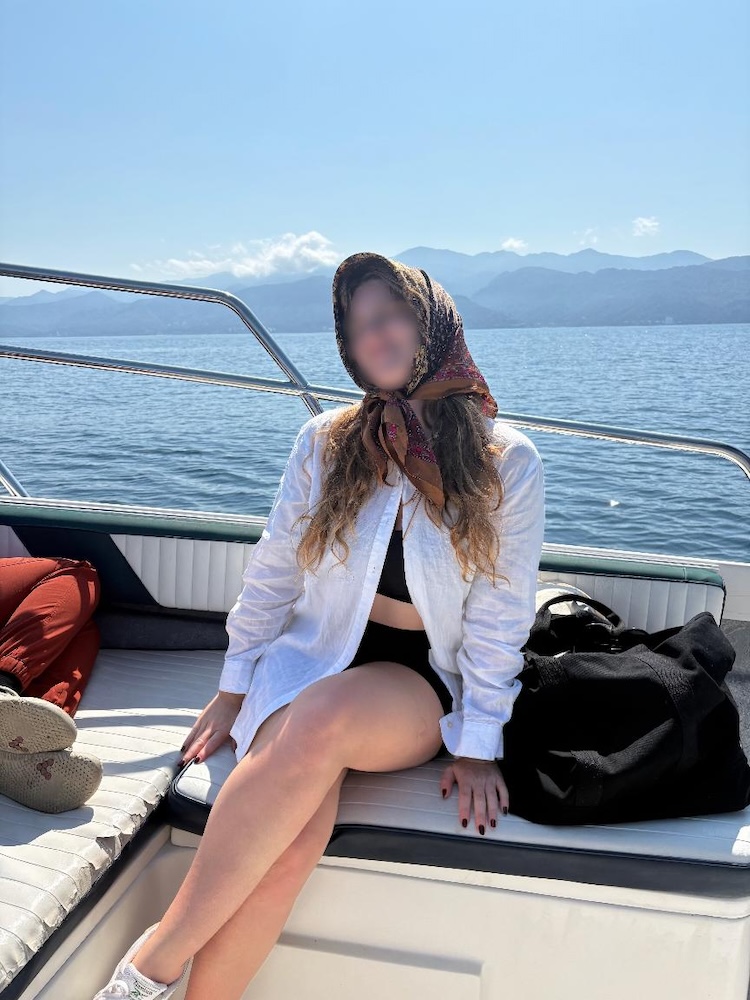
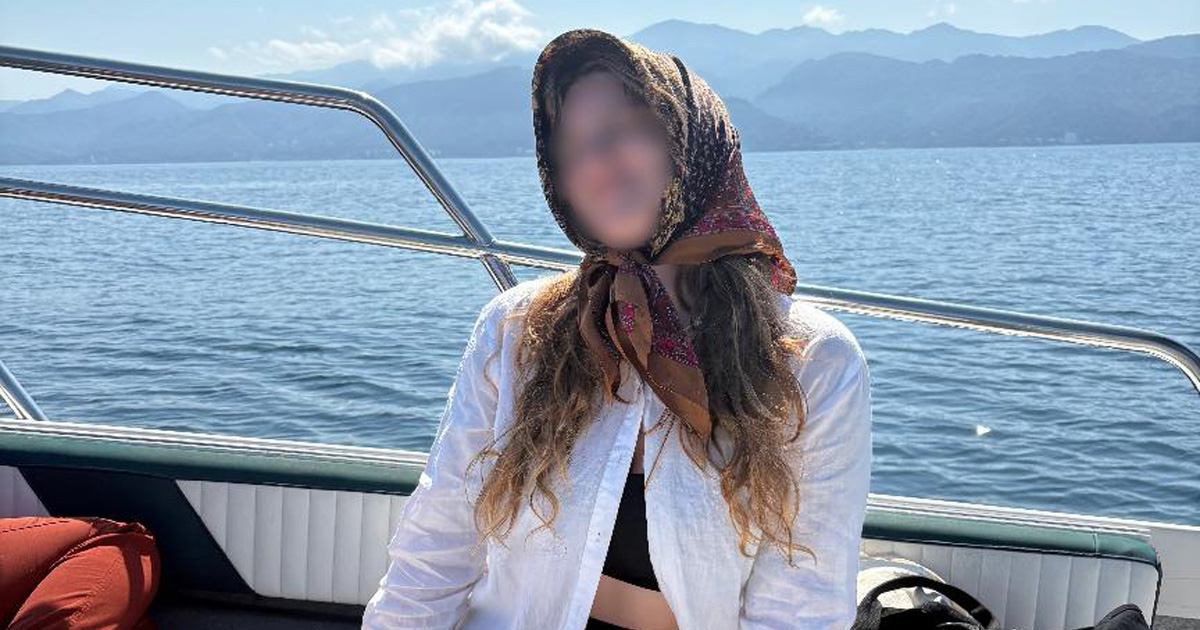
The moment our boat pulled away from the dock, it felt like the rest of the world disappeared behind us. The water stretched endlessly ahead, and every few minutes someone would point excitedly toward the horizon before shouting, “Whale!” We watched in awe as a pod of grey whales swam past us on their annual migration north through the Pacific while our little boat launched over wave after wave, sending us into fits of laughter.
By the time we reached Yelapa, I already felt the weight of the world lifted off my shoulders.
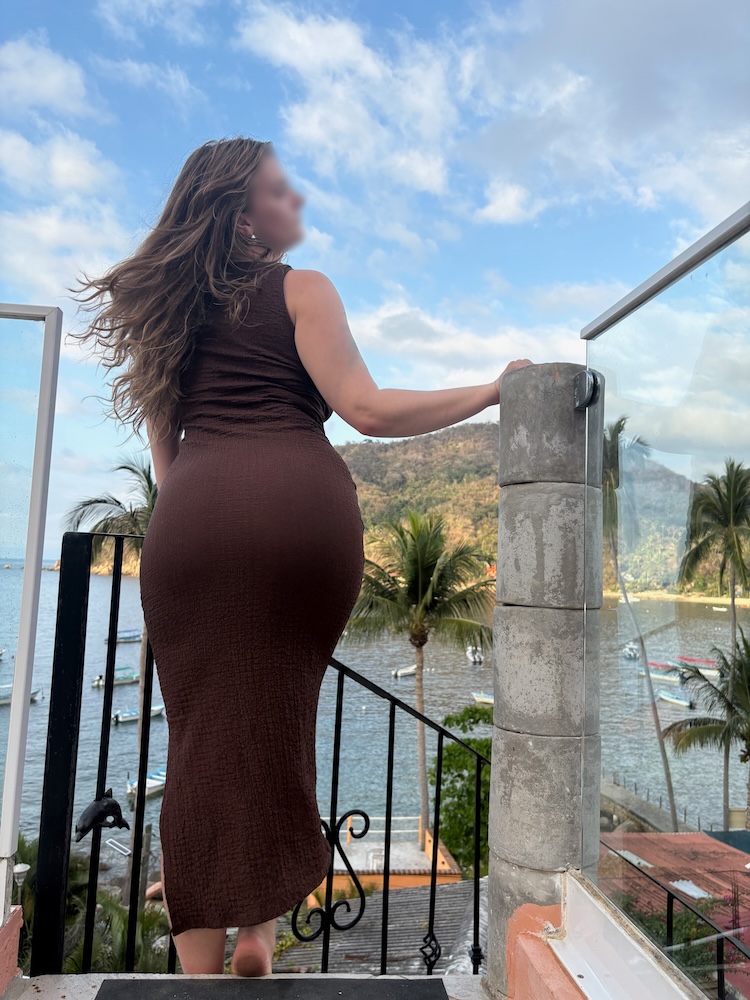
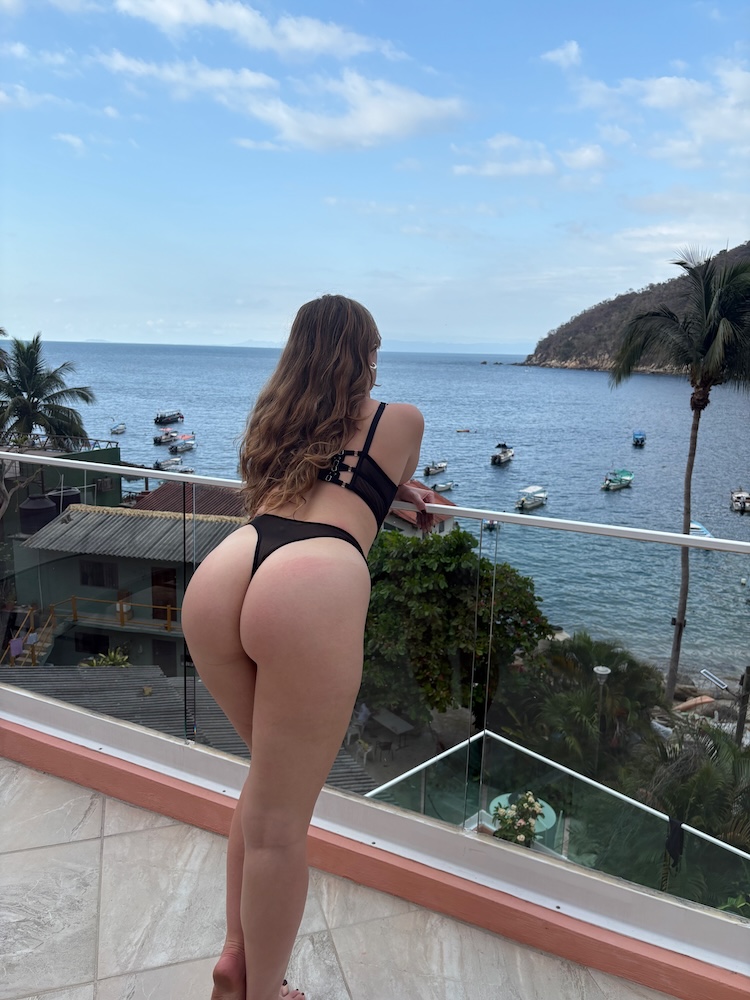
We rented a beautiful house with a sprawling patio overlooking the bay and our host welcomed us with a fully stocked fridge and fresh ceviche waiting on the table. It was one of those small acts of hospitality that instantly makes you feel at home.
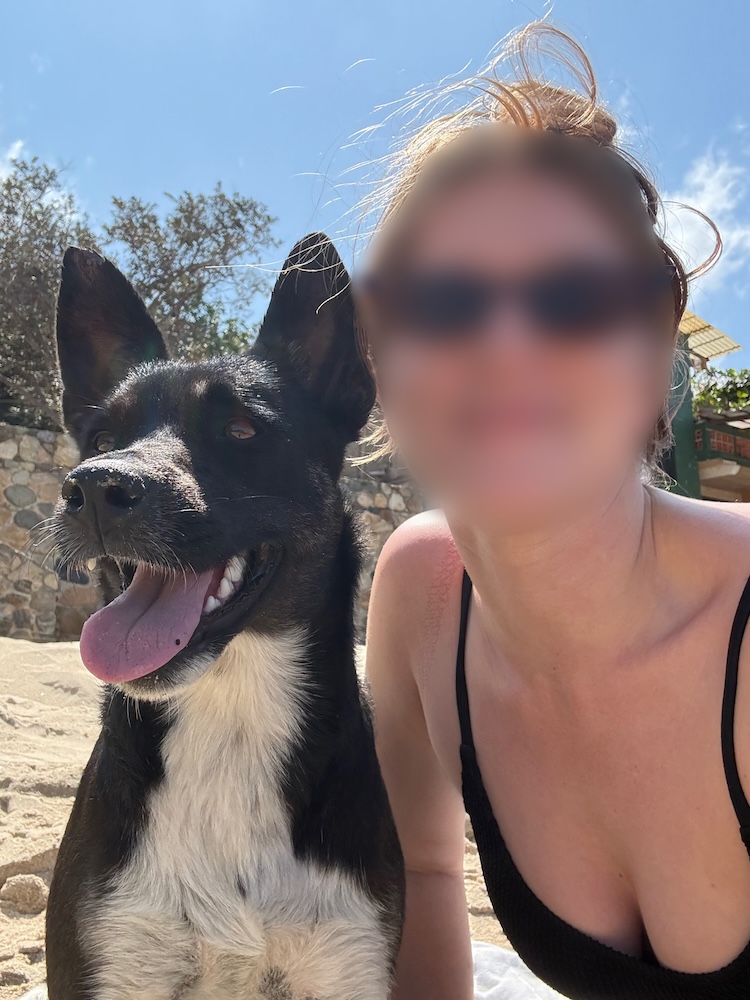
Shortly after settling in, I’d somehow acquired a new best friend. A local village dog, named Monica by the local community, quietly decided that I belonged to her. She accompanied me everywhere, leaned against me whenever I stopped walking, and happily stretched out beside me whenever I found a sunny spot to relax. Anyone who knows me knows I have an especially soft spot for dogs, my own rescue dogs back home have completely stolen my heart, so naturally I was smitten.
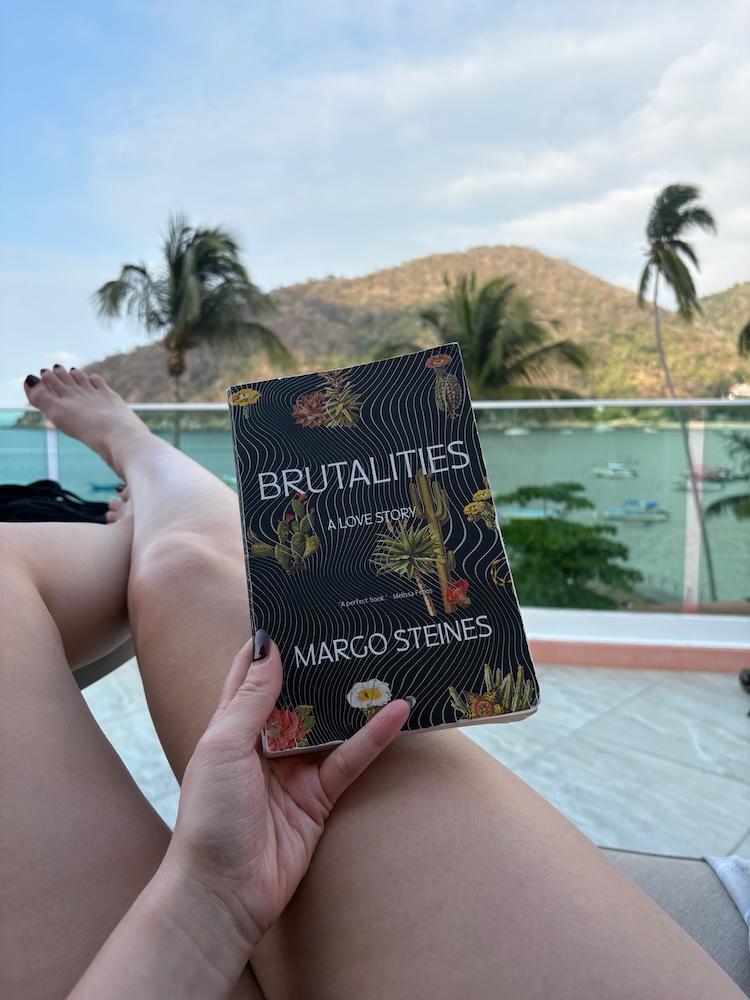
Throughout the trip, I borrowed Margot Steines’ Brutalities, a book my good friend Anika Fields recommended to me. Written by a former dominatrix, it traces Steines’ journey from the sex industry to working as both a welder and a university writing instructor, while also reflecting on her experience of pregnancy in the sweltering Arizona desert.
Reading it while surrounded by close friends whose lives have also intersected with the erotic industries gave the book an entirely different weight. It’s funny how some books seem to find us at exactly the right moment. Sitting in the Mexican sun, with friends I admire deeply, I found myself imagining a version of the world where sex workers are honoured and valued as readily as any other care worker.For a little while, that version of the world didn’t feel quite so impossible.
Most of our days were wonderfully slow. We’d read for hours, wander down to the beach, lose track of conversations, and laugh until our stomachs hurt.


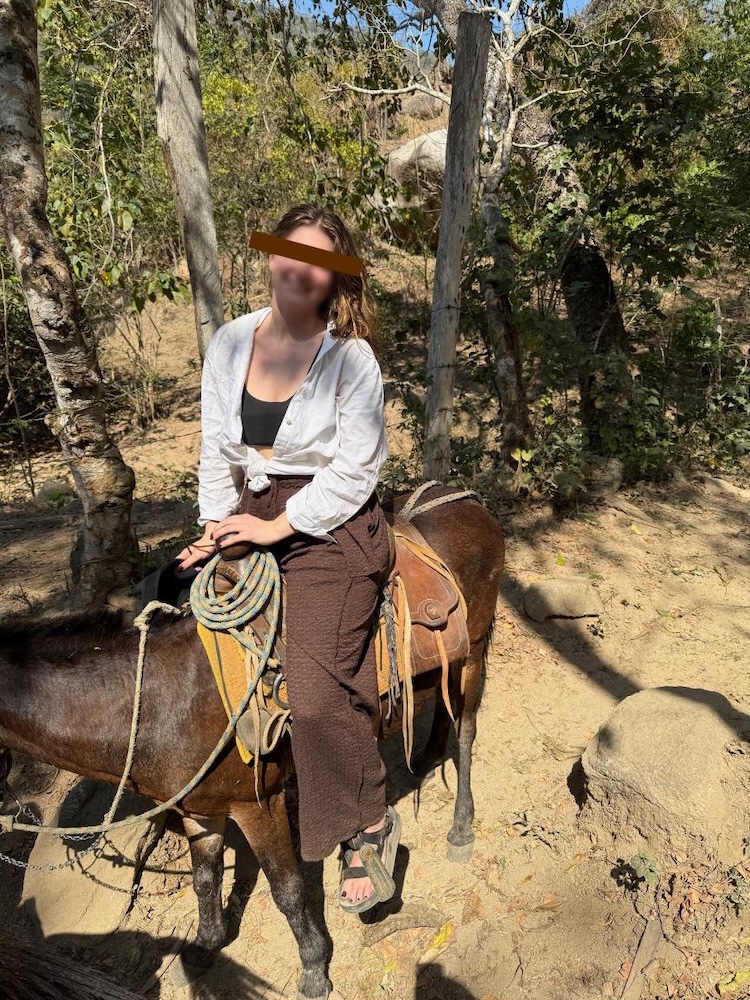
One afternoon, we set off on horseback to visit a remote waterfall. What no one mentioned beforehand was that platform Tevas are perhaps not the ideal footwear for scrambling through jungle trails.
Our ten-year-old guide took one look at me, silently assessed the situation, and immediately assigned me the smallest mule available. Venus Gold found this absolutely hilarious, and honestly, she wasn’t wrong.
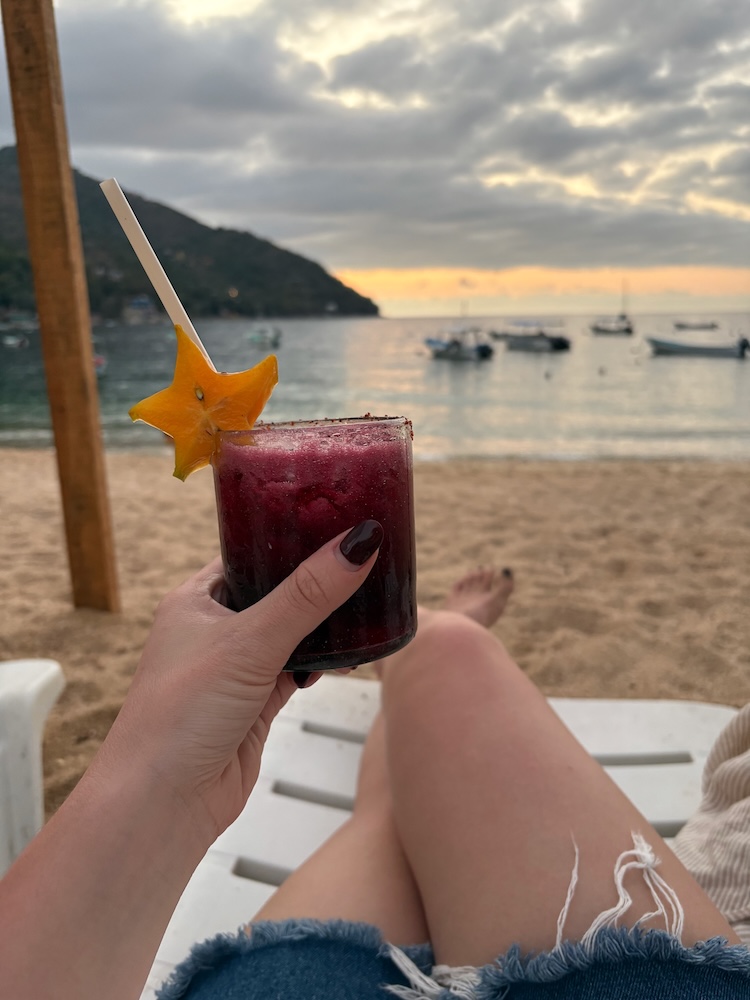
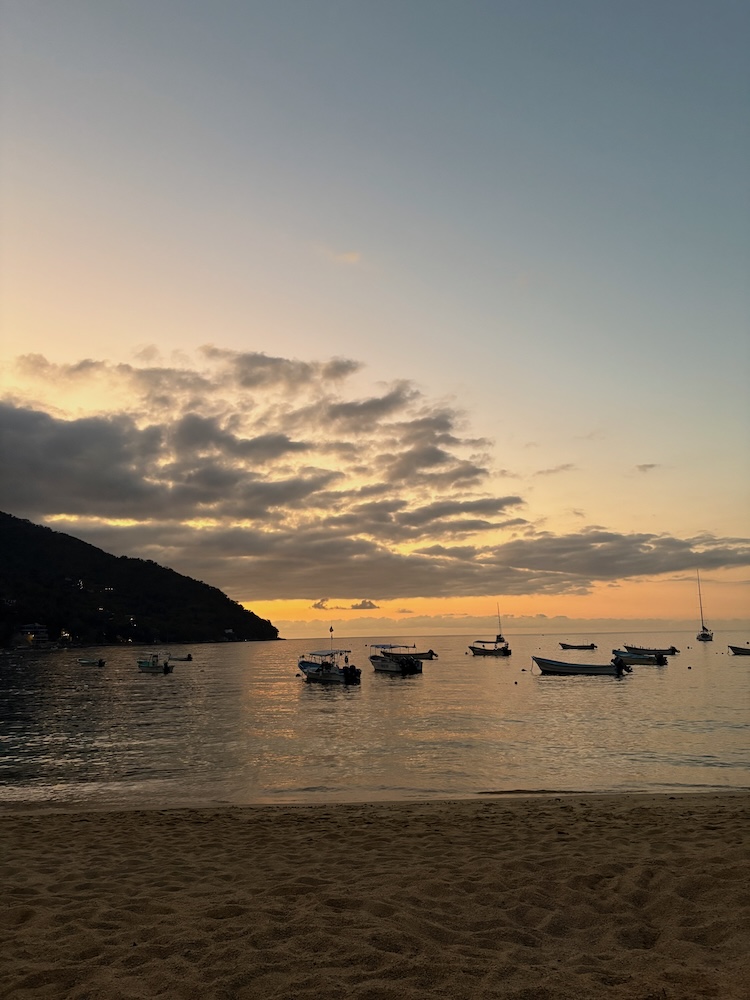
On our last evening together, we gathered on the beach with fresh ceviche, mezcal, and a few mushrooms to watch the sun disappear beneath the horizon. It was already one of those evenings you wish you could stretch out forever. Then, as we started walking home, someone noticed the water glowing.
Every step along the shoreline sent tiny bursts of light scattering through the waves. When I dipped my hand into the ocean and lifted it back out, countless tiny stars clung to my skin before slowly fading into darkness. I’ve been lucky enough to see bioluminescence on the West Coast before, but never with such breathtaking intensity. It felt almost impossible that something so magical could exist so quietly.
The magic didn’t stop there. As we made our way back through the jungle, the air buzzed with insects, frogs, and birds calling to one another in every direction. It was so loud that I had to stop and record it. The entire forest felt alive around us, and for a few minutes I simply stood still, letting myself take it all in. It really took “white noise” to a whole new level.
Leaving Yelapa was much harder than I expected.
As we climbed back into the water taxi the next morning, I found myself looking back toward the shoreline, trying to catch one last glimpse of Monica before we pulled away. I felt surprisingly emotional leaving behind this tiny village and slipping back into city life.
But as the boat picked up speed, the sun warmed our faces, whales surfaced once again in the distance, and my friends burst into another round of laughter. I realized I wasn’t just grateful for the trip itself—I was grateful for the life that had brought me to it.
Looking back now, especially after the challenges that followed (including a car accident!), I’m so glad I didn’t let the pressures of everyday life convince me to stay home. Some places give you beautiful memories. Others gently remind you what’s most important in life.
Yelapa gave me both.